Thursday, May 31, 2012

Leaf Printables for Coloring!

I just drew all of these for work and then thought I'd share them with you all.  My little Cupcake loves to color in the images like a coloring book, so enjoy.


Here are the cleaned up PDF versions if you prefer, I added the areas that were cut off from the images above (may be out of order) 1 2 3 4 5 6 7 8 9 10 11

Friday, May 25, 2012

Artist of the Week no. 11

Oceanic Art


The artwork of the Oceanic People was something I planned on teaching this year to my beginning students and while we may not have focused much on it in class I really wanted to share some images and facts on here regarding Oceanic Art.  I found this information and these images most inspiring and powerful because of our recent trip to Hawaii.  A place so scared, I didn't actually want to go to as a tourist.  After much resistance to my mom's offer, we gave in and spent six days on the beautiful island.  I found these people and their artwork most interesting because of the use of materials.  They are island dwellers and therefore have only the supplies of the island to construct visual images.  Their complete use of materials is something I greatly respect and believe all artists should aspire to. Waste is not beautiful nor beneficial.


Oceanic Art is the creative work made by the native peoples of the Pacific Islands and Australia. Hawaii and Easter Island are part of these as well.

There are four regions, they include...
Polynesia (Hawaii and surrounding)
Micronesia
Australia
Melanesia

Polynesia and Micronesia are both from the ancestral culture; Lapita.   

ALL of the regions were greatly (and not in a good way - in my opinion) affected by Western influence and colonization. Although, the creations of these people varies, the subject matter remains mostly the same; fertility and the supernatural.

 Masks are commonly used in religious ceremonies, and other art forms include; petroglyphs (rock engraving), tattooing, painting, wood carving, stone carving, and textile work are the most common art forms.

Australia
 Australia’s first native people are Aboriginal. They came to New Guinea and Australia about 40,000-60,000 years ago. The second came from Southeast Asia. These people lacked writing systems and made art on perishable (not lasting for long) materials. Oceanic people did not think of their work as art, but more as objects created for the practical purpose of use in religious ceremonies, or for use in everyday life. Rock art of Aborigines is the longest continuously practiced artist tradition in the world. They are most known for their rock art, which they still practice even after their contact with Western explorers. They are also known for their dot paintings and are known for dance paintings where they dance with paint on their bodies.

Australia has 3 time periods:
Pre-Estuarine (40,000-6000BC), Oldest and known for red ocher pigment.
Estuarine (6000BC-500AD) when increasing elaborate images appear.
Fresh Water (500AD-Present).

Rock paintings served several functions; ceremonies and amusement. One of the most elaborate collections of rock art in this area is the site Ubirr, a camping ground during wet seasons which has had its rock faces painted many times over thousands of years.

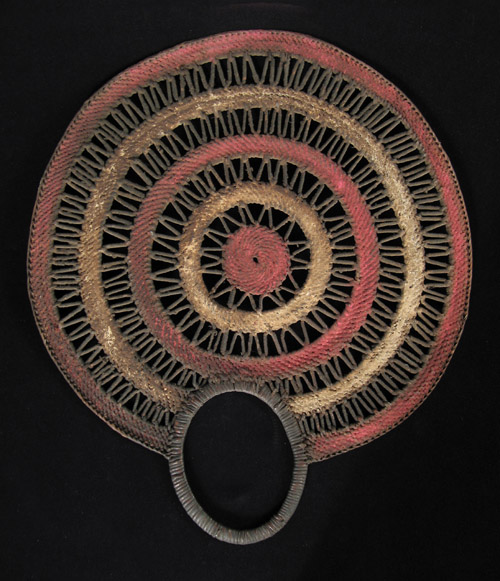
A headdress from New Guinea

Sculpture first appears in Oceania art in New Guinea as a series of stone figures throughout the island. The oldest dates to 1500 BC.

 There are three types of sculptures:
1. Mortars – tops contain images and sometimes geometric patters
2. Pestles –tops contain images, often birds or human heads
3. Freestanding figures - humans, animals, and phalluses.


Lapita (ancestors to Polynesia, Micronesia) 
Their art is best known for its ceramics. The pieces contain geometric motifs and sometimes anthropomorphic images. Some of the designs may be related to modern Polynesian tattoos and barkcloths. They were created by firing a comblike tool that stamped the designs on to wet clay. The ceramics were used in cooking, serving and storing food. It was functional.


sourceCeramic pieces with the patterns. 


Micronesia is second wave settlers of Oceania. 
Wood carving by men flourishes in the region. Stylized bowls, canoe ornaments, ceremonial vessels, and sometime sculptured figures. Women created textiles and ornaments, like bracelets and headbands. Micronesian art is simple and functional, but usually high standard of quality. They made the best possible use of what few natural materials they had available to them. After western cultures influenced the Micronesia people sculptural art forms ceased to exist. But architecture and weaving continued. In the 20th century there was a revived interest in traditional art forms. 

Mask from the Maori culture of New Zealand 

Polynesia is also from Lapita’s culture. They include Hawaiian islands, New Zealand, Tahiti, and Easter Isalnd. Polynesian art is characteristically ornate and often meant to contain supernatural power. In the 19th Century, depopulation of areas due to slave raiding and Western diseases disrupted many cultures. Because of the conversion to Christianity, the loss of many tradition cultural and artworks occurred, specifically sculpture. Secular art forms continued, such as carving and textile work.

Melanesia 
Typically the art is highly decorative and portrays exaggerated forms, often of sexual themes. It’s mostly made in connection with ancestors, hunting and cannibalism. Often they they used the context of spiritual rituals, for example; elaborate masks. After the 1600 and the increase of European explorers much of their art was lost.

In 1600, Melanesia, like the other regions of Oceania, saw increasing encounters with European explorers. It wasn't until the latter half of the 19th century however, that westernization began to takes its toll. Some traditional forms of art went into decline, but others like sculpture survived and even thrived in the region. Not until more of the islands was explored by the western powers that the sheer diversity of Melanesian art began to be seen. By the 20th century, Melanesian art began to find its way to the West and had a profound impact on contemporary artists. However, a great cultural disruption followed the WWII, and much traditional art began to decline or be destroyed. This was followed decades later by a new found appreciation for their native art forms.

Sources 1. 2.

want a simple version of these notes? The Google Doc of my notes handout for my students available here.

Happy Oceanic Art Educating.  

If you have more references and or information about oceanic art I'd love to see it, link it in the comments below!

Functional Friday No. 27

Baking Soda!
Image of Whole Food's Brand; Baking Soda

I recently rediscovered my love of baking soda.  I've been using it as shampoo (mix with lemon once a week) and for brushing Sonja's teeth (it's safe since she doesn't know how to spit yet) and as usual fridge and freezer freshener.  But here's some new ideas and uses I've found via pinterest.  Oh and another awesome thing about it, it doesn't come in plastic! Perfect for my War on Plastic challenge for 2013 and the packaging is recyclable.

Here's a list of 51 amazing uses for baking soda. Or how about 75 uses??

Stain Remover and more recipes.

Fresh Towels? Yes, please!

No more yellow stains on my white shirts? Also, a yes.

Co-Sleeping means our mattress isn't always the freshest, until this recipe!

and here's a Toothpaste Recipe!

Happy Functional Friday!

Thursday, May 24, 2012

D.I.Y. Photo Button Magnets and Push Pins from Contact Sheets


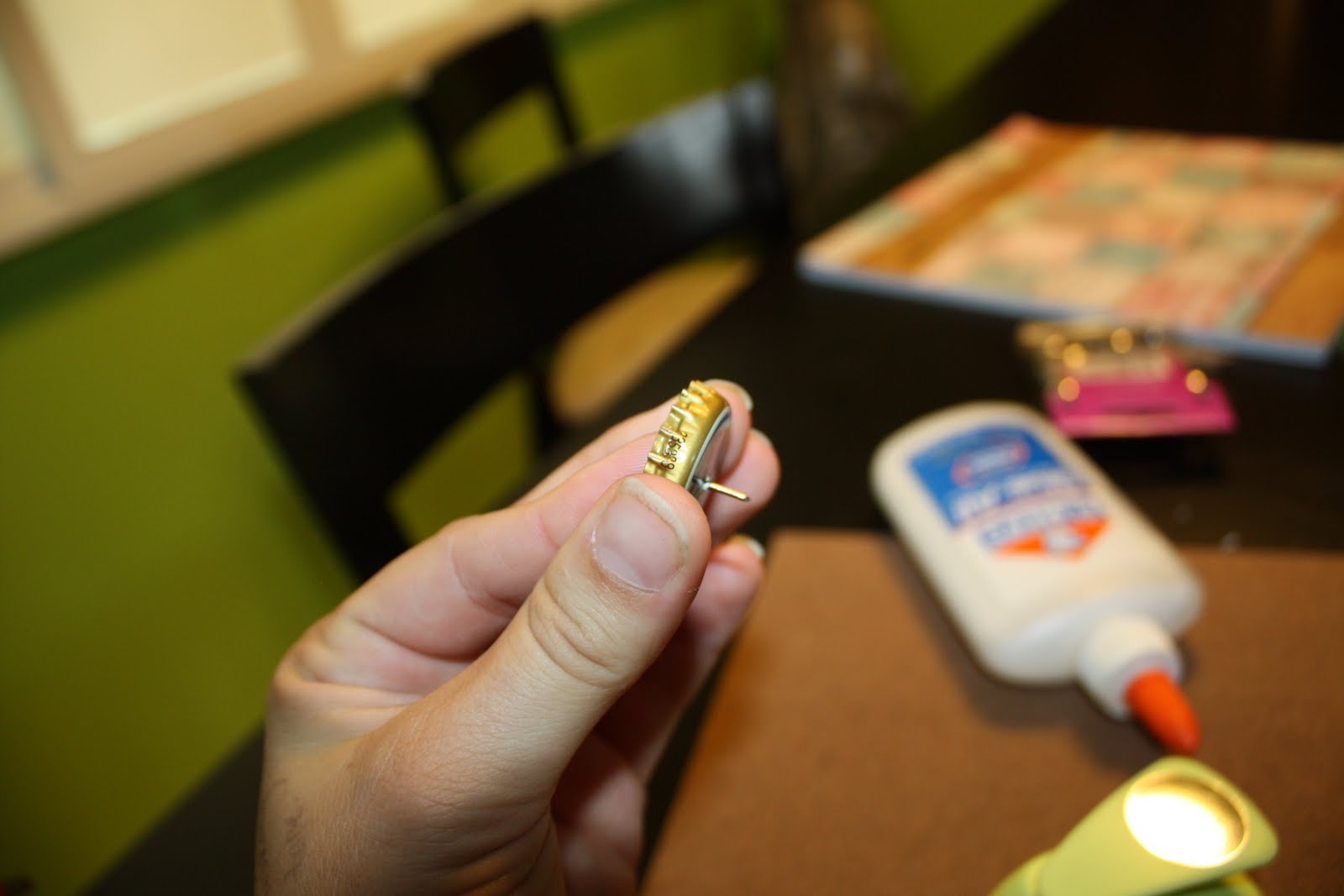
I almost threw away these (above) sheets of pictures that came with a recent shutterfly order. Then, I remembered I have a one inch round hole puncher and a bunch of non-recyclable bottle caps lying around.  So, I did what any other upcycler would have and punched out my favorite images from the small contact sheet and saved them for bottle cap creating.  You can see here and below, how to complete the bottle cap project.

For the magnets it's easy.  Just drop your inserts in! 

After adding the image, glue the magnet onto the sanded surface of the bottle cap using hot glue, epoxy or super glue.

For the push pins it's a little extra work, take a nail and hammer in into the center of the bottle cap.
Then, insert the thumb tack...

Set flat in basket or push into a flat cork board.


I used a basket as a working surface so the push pins could rest flat on this surface to dry.

Add Mod Podge using a paint brush.  Make sure to use a thick amount to properly cover the insert.

After you add mod podge your magnets or push pins should look like this.

finally, glue magnet onto the back when dry if not using the push pin method.


Tuesday, May 22, 2012

Link Love No. 13

My favorite aisle at the art store, paint and paper, who could ask for more?

Here are a few links I love right now.  I've pinned a few of these on my pinterest, but thought I'd share them here too.

Amazing yoga Photos!!

31 awesome uses for ball jars!

50 uses for Vinegar!

All Natural Cleaners, with recipes!!

Homemade disinfectants!

I REALLY love this ring!

Interesting, creativity tour, get into it.

Natural ways to get rid of a headache.

Finding a new blog to read.  Like I need anymore...

I love these raw bars from my friend Michelle's blog.  I'm making a serious effort to eatright4mybloodtype and to eat more of a raw vegan diet, without actually being vegan (meaning, I do organic local eggs and organic Greek yogurt but trying to focus on raw fruits, vegetable and nuts)

With all my friend's pregnant around me, I can't help but think about my future pregnancy (if and when it happens) and my evolving thoughts on the placenta.  I know I need to read at least one book about it.

While looking for items for Sonja's second birthday {LESS THAN 4 MONTHS AWAY!} I found the cutest party decor website.

And because I know many people are still choosing hospital births when they could birth at home, why women should fear homebirths!

Monday, May 21, 2012

Giveaway No. 9

The Green Book  by Elizabeth Rodgers and Thomas M. Kostigen, published by Three Rivers Press.
I bought this book and read it a few years ago and thought I should share the wonderful and helpful information it contains.  It's a simple read with little paragraphs regarding almost every topic.  I found the following pages most helpful in my decision making process for my daughter's upbringing.  Below you'll see a few of the reasons we avoid plastic and choose alternative options to the normal consumer driven parenting choices...


Giveaway closes at May 31, 2012 at Midnight

How to Enter:
1. Follow this blog and leave a comment telling me so, with name and contact info.
and/or
2. Follow my facebook page and leave a comment telling me so, with name and contact info.
and/or
3. Follow me on Twitter and leave a comment telling me so, with name and contact info.
and/or 
4. Leave a comment telling me what you like/dislike about this blog, what you'd like to know more about in terms of upcycling or environmental issues and/or your favorite vacation destination include your name and contact info.

I will announce a winner after I choose one using random.org on June 1, 2012

Monday, May 14, 2012

10 Ways to Precycle Plastic!

My goal this year was to avoid plastic completely as a practice for 2013 of Plastic Free Life!  but I've been both more discouraged and inspired with the past 5 months.  Things I thought would be easy to avoid have gotten more incorporated into our life and things I didn't think about have presented new challenges as well.  BUT, I thought I should give some sort of check in for both myself and readers on how we're doing as a family and how you too can cut out plastic.  To precycle plastic is similar to recycling but instead of recycling you just don't buy it PREventing the need to do anything with the waste, because... well, there isn't any.

So, let me start by saying that we already don't use a lot of plastic so the things I mention might be more or less extreme for you to consider based on your current plastic consumption.  Also, my major problem isn't with plastic so much in itself, as a functioning object, rather the waste produced by plastic, i.e. everything shrink wrapped or clear packaging that can't be recycled for various reasons.

1. Store your food in glass.  We use a combination of ball jars and pyrex (however those have plastic bpa free lids) and a few snack bags like these.  I haven't used a plastic baggie in years.  I feel really good about the fact those baggies aren't ending up in the trash and therefore the landfill.  I'm proud my daughter's food has not been tainted with leaching toxins nor am I contributing to carcinogens released by the production of such bags at a factory level.

2.  Purchase your food in paper and forgo the plastic produce bags.  The bulk section of the grocery store is really key for avoiding plastic and other packaging.  Everything is in big tubs and you can find things at a percentage of the canned or prepacked prices.  We only buy our beans, nuts, dried fruit and the like in these sections.  I use paper lunch bags to purchase the items in.  I prefer to store items in ball jars but the weight can't always be fully deducted from the scale and therefore costs more money SO, I use paper bags and when they get worn out I recycle them, also the bags are pen friendly so I don't have to waste those plastic tags on writing down the skew number.

3. Shop in the Bulk section.  I mentioned this above but it deserves it's own spot.  By shopping in the bulk section you are doing 3 or more things to reduce environmental impact of your food. 1. You're not purchasing the packaging for the item.  You can reuse your storage containers and you don't have to throw away the ones you purchased your items in.  In effect; precycling.  2. You're not purchasing water.  As in, the dry items have to be hydrated at your home, for example, beans soak in water, same for rice and grains.  This saves on transportation.  We all have tap water (in the US) and it's cheaper to use that water, than to buy the items already hydrated.  Once hydrated, they're bigger because they're full of water causing more shipping containers and more trucks full of each item. 3. Avoiding toxins.  The biggest thing on canned food right now is BPA free, everyone (who cares) is making the switch to BPA free cans, but why worry about if your food has been soaking in toxins. If you just buy them dry YOU know whats in the food and water.  Also, the other preservatives in canned food are simply not good for you, buy bulk and you avoid all of the above. (I realize the items in the bulk section may be stored in plastic but they're reusable plastic containers and maybe if we voice our opinion as consumers the stores will store them in glass jars instead!)

4. Make your own soap, shampoo and or tooth powder (recipes 1 and 2).  When you make these common items yourself, you're precycling the packaging they come in.  Almost all soaps, shampoos and tooth pastes come in plastic packaging.  In fact, at the moment, I can't think of ANY that don't.  Expect handmade ones like the company lush; but even then, there may be ingredients you're not into using.  Some ingredients for these at home hygiene products may come in plastic packaging as well but it's usually for more product and I've always been able to find a paper, metal or glass packaged alternative to the ingredient items as opposed to the premade products.

5. Make your own cleaning supplies.  We use vinegar to clean everything, so I buy a bulk container (plastic but recyclable) of vinegar and mix my various recipes for cleaning, I store the mixture in reusable spray bottles or recycled ones.  Preventing the new production of the toxic chemicals and new plastic containers for cleaning supplies.  I've also found glass containers of vinegar, unfortunately it's too pricey and small of an amount for me to use for cleaning, I do however buy it for the vinegar I plan on ingesting.

6. Make your own cooking spray.  I know my husband had a hard time when I gave up cooking sprays.  The container may be recyclable in some areas but the plastic lids are not.  So, we use a BPA free spay bottle with this recipe.  I buy all my oils in glass jars from the grocery store and I always try and buy the biggest version so it lasts longer and the bottle is more likely to be reused when I know it can hold more, if not I just recycle the glass.

7. Bring your own food containers when eating out (just keep a spare set in the car!).  We don't eat out often, mostly because there are still very few restaurants that can commit to using 100% organic and local ingredients, and we try to avoid the other stuff.  However, when we do eat out we usually don't finish ALL the food we order and while some places do offer environmentally friendly packaging it's usually not all that recyclable after the food has been in the container, and who wants to wash a container before they recycle it.  Just reuse it!  So we keep Pyrex with us or ball jars and we use those.  Of course, sometimes we forget but we make the effort! which is half the battle.

8. Bring your own cup when ordering coffee.  or any other gourmet drink.  This is one of the biggest impacts on my household.  I ALWAYS bring my glass cup with me to get coffee, or my ball jars with straw lids, and the coffee shop knows its me when they see my drink on the espresso line.  I even had the owner offer one of their cups to me when I forgot mine, and he told me I could bring it back the next day! I can't even tell you how disturbed I am when I see the trash cans at the farmer's market filled to the brim with plastic and paper cups.  THE FARMER'S MARKET! and they have some recycling bins! It's just easier to throw away these items than to find a recycling bin or reuse them!  If you could make one daily change this would be my goal for you, especially if you're a coffee drinker like me.  As a stay at home mom, it's my daily outing with my daughter and if I was just buying and throwing away plastic everyday... well, I'd be a hypocrite.  But  you'd just be wasteful :) please if you own cups, use those for your to go drinks!

9. Bring your own bags to the grocery store. duh.  But don't buy a new one if you forget the ones you already own, just ask for paper and reuse, then recycle it.  It's more wasteful to own 20 bags (like my mother) than to just make a one time paper exception when you forget.  As much as the media tries to tell you; you can not buy your way to sustainability.

10. BUY USED.  I saved this one for last because if you made it all the way to the bottom of this list I know you're committed!  This is the most challenging change for any American to make, I still struggle with it.  But whenever possible; buy used, this means everything (well almost everything) clothes, movies, books, electronics, any objects.  The items you're buying used have already been packaged and distributed so instead of you buying it new and the previous owner just throwing it away, you buy it.  Saving money, trash and benefitting the person selling the items.  I know a lot more items would end up out of the trash if the original owner thought someone else might use it.  And that brings me to my next point! Before throwing something away, ask yourself if you could repair or reuse the item.  If its not destroyed, donate it.  Salvation Army or Goodwill or any other charitable organization will take your fixable and clean items.  When we all do a little something extra to benefit the earth, we benefit ourselves and each other!

Hope these 10 things make precycling plastic easier for you or maybe gives you a starting point or goal. Good Luck!  If you have any additional suggestions, please, leave a comment!


p.s. follow my healing and cleaning board on pinterest to find out what else we make ourselves, or how we clean and heal naturally without the use of toxic, cacinogenic and plastic ingredients and packaging.

Oh! and all images on D.I.Y. Cupcake are copyrighted unless sourced from another website. so please don't steal photos without linking back, please and thank you.

Thursday, May 10, 2012

D.I.Y. Instant Art and Decor.

These glowing vessels above were created by my 9th and 10th grade students after learning about the Artist Eva Hesse (see previous blog post).  Can you guess what they're made from?

The artist, Hesse, often worked in unconventional materials such as fiberglass and latex.  The vessels above were inspired by these:
Repetition Nineteen III, 1968


We used packing tape to create our vessels and worked from the inside out, meaning that I faced the sticky side out and wrapped the tape around a coffee container then slid it off the container and faced another layer of tape with the sticky side in, both sides become smooth and the more layers of tape create the slighly opaque affect and the more "messed up" the tape gets the more unique the vessel becomes.  I dropped in some tea lights to give them a glowing affect and you could do the same for instant party decor OR you too could teach this art lesson to your students.  I actually don't demonstrate how to create the vessel until after they make their own that way they have to problem solve for themselves.  It's A LOT of fun to watch and an even prettier outcome.

Happy Art Making!